
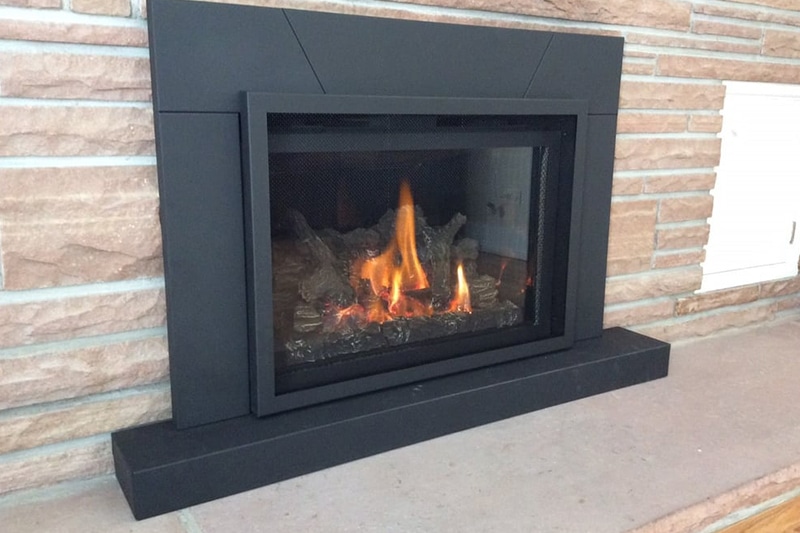
It happens the same way almost every year. The first real cold snap hits Denver in November, you walk over to the gas fireplace that worked fine last spring, flip the switch, and nothing. No flame, no click, no comfort. Before you assume the worst, know this: a gas fireplace that will not light usually has a simple explanation, and some of them you can check yourself in five minutes without any tools.
I have repaired gas fireplaces around metro Denver for a long time now, and the same handful of causes come up over and over. Let me save you some frustration.
One rule before anything else. If you ever smell gas near the fireplace, stop. Do not flip switches, do not relight anything. Leave the house and call your gas utility from outside. Everything below assumes there is no gas odor.
Check the simple things first
You would be surprised how many service calls end at step one. Make sure the gas shutoff valve near the fireplace is actually in the open position, parallel with the pipe. If anyone worked on your home recently, painters and plumbers included, valves get closed and forgotten.
Next, check the obvious electrical suspects. Many units have a switch or breaker feeding them, and a tripped breaker will silence a fireplace completely. If your fireplace runs on a wall thermostat or a timer, confirm those are actually calling for heat before blaming the unit. If you use a remote, put fresh batteries in it, and check whether your model also has a battery backup box for the receiver, usually tucked under the bottom louver. Dead receiver batteries are one of the most common causes of a fireplace that suddenly stops responding, and they always seem to die during the first cold week of the season.
The pilot light
Older units have a standing pilot, the small flame that burns continuously behind the glass. If yours is out, your fireplace cannot light no matter what the switch does. Relighting instructions are printed on a plate inside the lower panel of your specific unit, and I want you to follow those rather than a generic internet version, because ignition systems differ. If the pilot relights and stays lit, you are probably back in business.
If the pilot lights but will not stay lit after you release the knob, that points to a worn thermocouple, the small safety sensor that sits in the pilot flame. When it can no longer prove the flame exists, it shuts the gas off to protect you. That part is doing its job, just doing it too aggressively because it is dirty or failing. Replacing it is a normal gas fireplace repair visit for us.
Newer fireplaces often use electronic ignition instead of a standing pilot. When those fail to light, you will usually hear clicking with no flame, or nothing at all. Those systems have their own logic and their own failure points, and they are best left to a technician.
When the pilot is lit but the fireplace still will not fire
This one confuses people the most. The pilot burns happily, the wall switch flips, and nothing happens. In most cases the culprit is the switch circuit itself. A standing pilot fireplace generates its own tiny electrical current through a part called a thermopile, and that current is small enough that a corroded wall switch or a loose connection can swallow it completely. A weak thermopile does the same thing. Neither one is dangerous, but both need a technician with a meter to diagnose properly.
What the flame itself can tell you
Even a fireplace that lights can be asking for service. A healthy gas flame burns mostly blue at the base with steady yellow tips on the decorative flames. A lazy, all-yellow flame, soot collecting on the glass or logs, or a unit that lights and then shuts itself down a few minutes later are all signs that the burner is dirty or the unit is not getting the air it needs. Do not just live with those symptoms. They are exactly what annual service exists to catch, and while we are at it, make sure you have a working carbon monoxide detector in the room. Every home with a gas appliance should.
When cold weather itself is the problem
Denver gives gas fireplaces a specific challenge. A vent that terminates on a windy wall can suffer downdrafts strong enough to blow out a pilot or trip a safety switch, and on bitter nights a unit that sat unused all summer may struggle on the first few attempts while air clears from the gas line. Dust and pet hair burning off after months of sitting idle can also produce an alarming smell for the first hour. That part is normal. A pilot that repeatedly blows out in wind, though, is worth a service call, because there are vent cap solutions for exactly that.
What a service visit looks like
When we come out, we test the ignition system, clean the pilot assembly and burner, check the thermopile and thermocouple readings, inspect the venting, and make sure the logs and embers are placed the way the manufacturer intends, since even misplaced logs can cause sooting and poor flame behavior. Most fireplaces leave the visit working and looking better than they have in years. Annual service is also the right moment for a proper fireplace inspection, so small issues get caught while they are still small.
And if your unit is old enough that parts are getting hard to find, we will tell you straight rather than selling you repair after repair. Sometimes replacement is the honest recommendation, and I compared the options in an earlier piece on gas versus wood fireplaces if you are weighing that decision.
A cold fireplace in November does not need to ruin your week. Check the valve, the breaker, the thermostat, the batteries, and the pilot. If those do not solve it, get in touch and we will have someone out. During business hours you will always reach a real member of our team, and our technicians are certified on gas, wood, and pellet appliances alike.
Jon Geypens
Owner, Chimney Sweeps Of America
303-973-7376
