Chimney Liner Installation and Replacement in Denver
Stainless steel chimney relining that restores safe operation and protects your home’s structure. Sized for wood, gas, and pellet appliances by CSIA-certified technicians who have been relining Denver chimneys since 1982.
The liner is the interior channel of your chimney. It serves three functions: containing combustion gases so they exit through the top of the chimney instead of leaking through the masonry into your home, protecting the chimney structure from the corrosive byproducts of combustion, and preventing heat transfer to combustible materials (wood framing, insulation) that sit close to the chimney.
When the liner is intact, the system works. When it’s cracked, deteriorated, or missing entirely, you have a chimney that can leak carbon monoxide into your home, transfer enough heat to ignite framing materials, and let moisture penetrate the masonry from the inside out. An unlined or damaged-liner chimney is unsafe to use until it’s fixed.
Signs Your Liner Needs Replacement
Clay Tile Pieces in the Firebox
If you’re finding chunks or chips of clay tile in the firebox or on the smoke shelf, the liner is breaking apart. Clay tiles crack from thermal shock (especially after a chimney fire), age, and freeze-thaw exposure. Once they start shedding pieces, the flue is compromised.
Cracks Visible on Video Inspection
A Level 2 chimney inspection includes a video scan of the flue interior. Cracks in the clay tile that aren’t visible from the firebox opening show up clearly on camera. If your inspector found liner cracks, relining is the next step.
Chimney Fire History
Even a small chimney fire produces temperatures that can crack clay tile liners. If your chimney has had a fire at any point, the liner should be scoped with a camera before the chimney is used again. A liner cracked by a chimney fire should stay out of service until it has been relined.
White Staining on Upper Exterior Masonry
Efflorescence (white mineral deposits) on the upper courses of brick means moisture is migrating through the chimney walls and evaporating on the surface. If the crown and cap are intact, the moisture may be coming from inside the flue through a failed liner. Combustion gases contain water vapor, and a cracked liner lets that vapor into the masonry.
No Liner at All
Homes built before the 1940s in Denver often have unlined chimneys. The flue is just raw brick. Research shows that unlined chimneys allow heat to transfer to adjacent wood framing fast enough to ignite it. If your home is old enough that the chimney predates liner requirements, a video inspection will confirm whether a liner exists, and if it doesn’t, installation is a safety necessity.
Fuel Type Conversion
Switching from a wood-burning fireplace to a gas insert, or adding a gas furnace to a chimney that previously served only a fireplace, changes the liner requirements. Gas appliances produce acidic condensation that eats through clay tile. And the flue size needed for a gas appliance is different from what a wood fireplace requires. An oversized flue on a gas appliance causes poor draft and condensation problems. We size the new liner to match the appliance’s specific venting requirements.
What We Install
Stainless Steel Liners
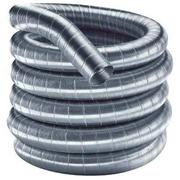
This is what we recommend for the vast majority of Denver relining projects. Stainless steel liners are UL-listed, corrosion-resistant, and compatible with wood, gas, and pellet appliances. Flexible stainless is used for chimneys with offsets or bends. Rigid stainless provides the smoothest interior surface for straight runs, which improves draft performance and makes future cleaning easier. We insulate around the liner with a ceramic blanket or vermiculite fill to maintain flue temperature, improve draft, and add an additional layer of heat protection.
Cast-in-Place Liners
For chimneys with severely damaged masonry where the interior structure needs reinforcement beyond what a steel liner provides, we install cast-in-place liners. A lightweight concrete mix is pumped around an inflatable bladder inside the chimney, forming a new, smooth, seamless flue. This method adds structural strength to the chimney while creating a UL-listed liner system. We use cast-in-place selectively when stainless steel alone won’t address the condition of the surrounding masonry.
Why Denver Chimneys Need Relining More Often
Two altitude-related factors accelerate liner wear along the Front Range. First, the reduced oxygen at 5,280 feet produces less efficient combustion in wood-burning systems, which means more creosote, more corrosive byproducts, and more chemical attack on the liner surface. Second, gas appliances at altitude produce condensation that’s slightly more acidic due to combustion chemistry changes at lower air pressure. Clay tile liners in Denver-area homes tend to show deterioration 3 to 5 years earlier than identical liners at sea level.
Then there’s the freeze-thaw factor. Moisture that enters through a cracked liner saturates the surrounding masonry from the inside. At 100+ freeze-thaw cycles per year, that interior moisture accelerates structural damage that’s invisible from the outside. By the time you see exterior symptoms (efflorescence, spalling), the interior damage is often extensive.
The Installation Process
We start with a video inspection of the existing flue to document its condition and measure the chimney’s dimensions, length, and any offsets. Based on the appliance type and the chimney’s geometry, we select the correct liner diameter and material.
The old liner (if clay tile) is left in place in most cases. Removing clay tile liners is destructive, expensive, and usually unnecessary because the new stainless steel liner sits inside the existing tile. If the clay tile has collapsed or is blocking the flue path, we remove the obstruction before installing.
The new liner is lowered from the top of the chimney and connected to the appliance at the bottom. We install a top plate and rain cap at the chimney top, insulate around the liner, and connect the base to the fireplace or appliance with a stainless steel connector plate. The entire system is sealed, insulated, and tested for proper draft before we leave.
Most installations are completed in a single day. If the inspection turns up damage beyond the liner, our chimney repair team handles crowns, flashing, and masonry in the same project, and our gas fireplace and wood fireplace technicians take care of the appliance side. Current inspection rates are listed on our pricing page.
Frequently Asked Questions
Cost depends on chimney height, flue size, liner material, and whether insulation is included. We provide a detailed quote after on-site evaluation including video inspection of the existing flue.
Most stainless steel installations are completed in one day. Complex installations involving offsets, multiple flues, or cast-in-place liners may require two days.
Signs include clay tile pieces falling into the firebox, cracks visible on video inspection, efflorescence on exterior masonry, any history of chimney fire, or a pre-1940s home that may have no liner at all. A Level 2 chimney inspection confirms the condition.
Yes. Gas appliances produce acidic condensation that corrodes clay tile and unlined masonry. A properly sized stainless steel liner protects the chimney and ensures safe carbon monoxide ventilation.
Stainless steel is the best option for most Denver homeowners. It’s UL-listed, corrosion-resistant, compatible with all fuel types, and lasts 15 to 20 years or more.
Clay tile liners can’t be effectively repaired once cracked. A full reline with stainless steel is the more reliable and cost-effective solution in almost every case.
Yes. Building codes require a listed liner system for all chimneys serving fireplaces and heating appliances. An unlined chimney is a code violation and a safety hazard.
Proudly serving Denver, Wheat Ridge, Lakewood, Arvada, Golden, Boulder, Littleton, Englewood, Aurora, Westminster, Centennial, Parker, and all of metro Denver.