Chimney Damper Repair and Replacement in Denver
Fix cold drafts, smoke problems, and wasted heating dollars. We repair and replace throat dampers, top-mount dampers, and chimney-top dampers for every type of fireplace system.

Fix cold drafts, smoke problems, and wasted heating dollars. We repair and replace throat dampers, top-mount dampers, and chimney-top dampers for every type of fireplace system.
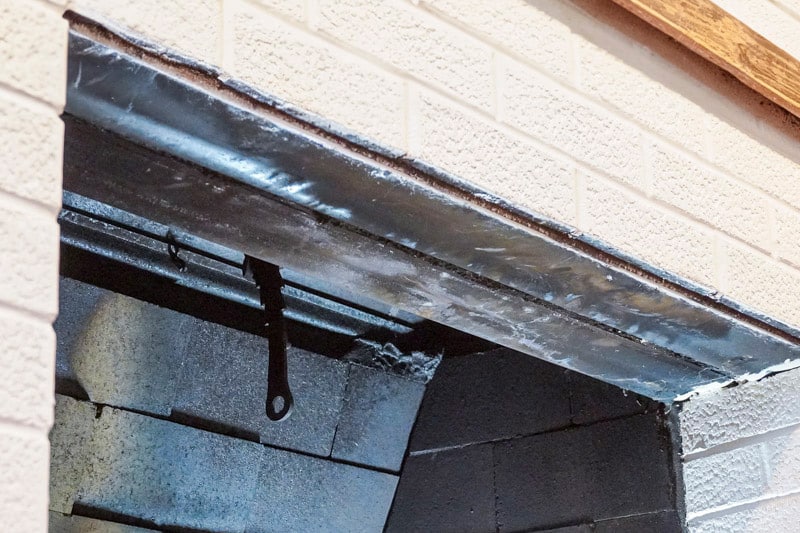
The damper is a metal plate or door that sits either inside your firebox (throat damper) or on top of your chimney flue (top-mount damper). Its job is simple: open when you want to burn a fire so smoke can go up the chimney, closed when you’re not burning so heated air stays in your house and cold air stays out.
When it works, you never think about it. When it fails, you feel it immediately. A damper that won’t close is an open hole in your roof. Your furnace pushes warm air into the living room while it escapes straight up the chimney. Cold air sinks down the flue and pools around the fireplace. Your heating bill goes up and your house feels drafty near every fireplace. A damper that won’t open fills the room with smoke the moment you light a fire.
Either way, a broken damper needs attention.
If you feel cold air coming from the fireplace area when it’s not in use, the damper isn’t sealing. This could be a warped plate that no longer seats against the frame, a rusted-through section, or a handle mechanism that’s broken and won’t pull the plate tight. Some homeowners don’t realize how much heat they’re losing until the damper gets fixed and the draft disappears.
A damper stuck partially closed restricts the flue opening and causes smoke to back up into the living space. If you’re getting smoke in the room every time you light a fire and the flue is clean, the damper is the most likely culprit. We check damper operation as part of every chimney inspection and sweep.
Grab a flashlight and look up into the firebox. If the damper plate is visibly rusted, warped, cracked, or has sections missing, it’s past the point of adjustment and needs replacement. Rust is especially common in Denver because moisture from rain and snowmelt enters through a missing or damaged chimney cap and sits on the damper plate.
Throat damper handles can seize from rust, creosote buildup, or a warped plate that’s jammed against the frame. Forcing a stuck handle risks breaking the mechanism or the plate itself. If the handle won’t move with reasonable pressure, call us rather than trying to muscle it.
Some older Denver homes have fireplaces that were built without a damper, or the original damper was removed at some point and never replaced. If your fireplace has no damper and no tight-fitting glass doors, you’re losing conditioned air up the chimney 24 hours a day. A top-mount damper can be installed on virtually any flue to solve this.
The traditional damper. A cast iron or steel plate that sits in the throat of the firebox, operated by a handle, lever, or rotary control. Throat dampers take direct heat exposure from every fire and direct moisture exposure from above. Over time, they warp from heat cycles, rust from moisture, and lose their seal. We repair throat dampers when the issue is the handle mechanism or a minor seal problem. When the plate itself is warped or rusted through, we replace it.
A top-mount damper sits on top of the flue tile instead of inside the firebox. It’s connected to a cable or chain that runs down the inside of the flue to a control handle mounted in the firebox. When closed, it creates a much tighter seal than most throat dampers because it uses a silicone or rubber gasket. It also doubles as a chimney cap, keeping rain, animals, and debris out of the flue.
For homeowners replacing a failed throat damper, we often recommend switching to a top-mount. The seal is better, the energy savings are real, and future replacement is simpler because it’s accessible from the chimney top rather than requiring work inside the firebox.
Similar to top-mount dampers but designed for specific chimney configurations, including prefabricated (factory-built) chimneys and chimneys with non-standard flue sizes. We size and install these to match your specific system.
Denver’s climate is particularly hard on dampers. The combination of heavy seasonal use, moisture exposure, and temperature extremes creates a failure timeline that’s shorter than what homeowners in milder climates experience.
Moisture is the primary killer. Rain and snowmelt that enters through a damaged or missing chimney cap lands directly on the damper plate. In a climate with 100+ freeze-thaw cycles per year, that moisture accelerates rust at a rate that would surprise most homeowners. A cast iron throat damper in a Denver home with no chimney cap can rust through in 8 to 10 years. The same damper in a capped chimney might last 20.
Heavy seasonal use is the second factor. Denver homeowners burn fires from October through April, sometimes daily. Each fire subjects the damper to thermal cycling. The plate heats, expands, cools, and contracts. Over hundreds of cycles, the plate warps. The warping is usually gradual enough that you don’t notice the seal degrading until the draft becomes obvious.
Not every damper problem requires a new damper.
We repair when the issue is the handle mechanism, a minor seal gap that can be corrected with adjustment, or surface rust that hasn’t compromised the plate’s integrity.
We replace when the plate is warped from heat exposure, rusted through or structurally compromised, or the frame itself is damaged. We also replace when there’s no damper at all.
When replacement is needed, we discuss the options: a new throat damper in the same configuration, or an upgrade to a top-mount damper that improves the seal and adds chimney cap protection. We’ll tell you the cost difference and the pros and cons of each so you can make the right call. Damper work often pairs with other wood fireplace repairs and full chimney repairs, and we can handle all of it in one visit.
Look for cold drafts from the fireplace when it’s not in use, smoke entering the room when you light a fire, difficulty moving the handle, or visible rust and warping when you look up into the firebox with a flashlight.
It depends on the damper type and whether it needs adjustment, repair, or full replacement. We provide a quote after on-site evaluation.
A top-mount damper sits on top of the flue instead of inside the firebox. It seals tighter, doubles as a chimney cap, and is easier to replace in the future. For homeowners replacing a failed throat damper, it’s often the better long-term investment.
Minor issues like a stuck handle or surface rust can sometimes be repaired. If the plate is warped, rusted through, or no longer seals against the frame, replacement is the right call.
Yes, significantly. A damper that won’t close or has lost its seal lets heated air escape up the chimney and cold air fall in. Homeowners with failed dampers often notice a persistent cold draft and higher heating costs during winter.
You can light a fire, but you’ll lose a lot of heat when the fireplace isn’t in use, and rain, animals, and debris can enter the flue. Get it repaired before heating season.
Damper repair and replacement by CSIA-certified technicians. Serving metro Denver since 1982.
Proudly serving Denver, Wheat Ridge, Lakewood, Arvada, Golden, Boulder, Littleton, Englewood, Aurora, Westminster, Centennial, Parker, and all of metro Denver.