
Common Wood Fireplace Problems We Fix
A wood-burning fireplace is one of the simplest heating systems in your home. It’s also one of the most punished. Every fire subjects the firebox to temperatures above 1,000°F. The smoke chamber and damper handle corrosive byproducts with every burn. And in Denver, where homeowners lean on their fireplaces from October through April, that wear compounds fast.
Most of the repair calls we get fall into a few categories. Here’s what we see and what we do about it.
Cracked or Deteriorating Firebrick
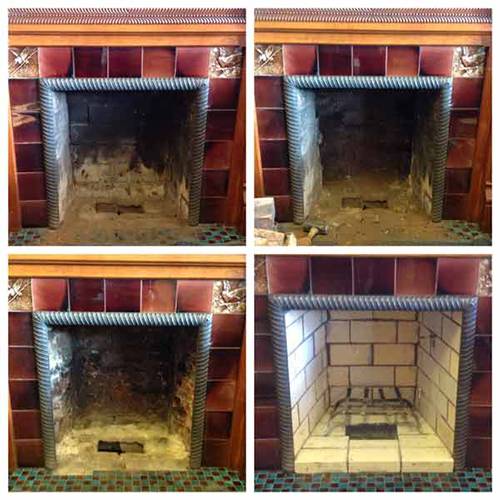
Firebrick is designed to handle extreme heat, but it doesn’t last forever. Repeated thermal cycling which heats to 1,000°F and cooling back down causes cracks, spalling, and eventual crumbling. Once the firebrick fails, the structural masonry behind it is exposed to temperatures it was never meant to take. We replace damaged firebrick and reline the firebox floor to restore the heat barrier.
Damper Problems
The damper controls airflow in and out of your chimney. When it works, you barely notice it. When it doesn’t, you get one of two problems: a damper stuck open wastes heated air up the chimney all winter, driving your heating bill up noticeably. A damper stuck closed fills your living room with smoke the moment you light a fire. Dampers warp from heat exposure, rust from moisture, and seize from creosote buildup. We repair or replace dampers depending on the type and condition, throat dampers, top-mount dampers, and chimney-top dampers each have different service requirements.
Smoke Coming Into the Room
A fireplace that smokes into the house is telling you something is wrong. The cause might be straightforward or layered. Common culprits include a damper that isn’t opening fully, a flue that’s too small for the firebox opening, negative air pressure in the home pulling air down the chimney instead of up, a cold flue that hasn’t developed enough draft, or a blockage from creosote buildup or animal nests. We diagnose the actual cause rather than guessing, because the fix for a sizing issue is completely different from the fix for a pressure problem.
Smoke Chamber Damage
The smoke chamber sits above the damper and funnels combustion gases into the flue. In older fireplaces, the smoke chamber was often left with rough, corbeled masonry which is a stepped surface that creates turbulence and traps creosote. Modern standards call for a smooth, parged surface. We repair cracked smoke chambers and apply refractory cement parging to create the smooth surface that improves draft and reduces creosote accumulation.
Cracked or Missing Mortar Joints in the Firebox
The mortar between firebricks is the first thing to go. Heat breaks it down faster than the brick itself. Missing or cracked mortar joints let heat reach areas behind the firebox where combustible framing may sit. We repoint firebox mortar joints with high-temperature refractory mortar, not standard masonry mortar, which can’t handle the heat and will fail again within a season.
Hearth Extension Damage
The hearth extension the non-combustible floor area in front of your fireplace which protects your flooring from embers and radiant heat. Cracked or undersized hearth extensions are a code violation and a fire risk. We repair or extend the hearth to meet current NFPA clearance requirements.
Denver’s Climate and Your Wood Fireplace
Denver homeowners burn more fires per season than most of the country. Cold nights from October into April, combined with the dry air that makes a fire feel especially good, mean your fireplace sees heavy use. That volume of use accelerates every type of wear.
At altitude, wood fires burn less efficiently. The 17% reduction in available oxygen at 5,280 feet produces more smoke per fire, which means more corrosive byproducts passing through the smoke chamber and more creosote coating the flue. Fireboxes in Denver-area homes tend to show wear earlier than identical units at lower elevations.
Then there’s the freeze-thaw factor. Moisture that enters through a cracked crown or failed flashing reaches the smoke chamber and firebox area. When it freezes, it expands mortar joints and widens cracks that were already under thermal stress. The combination of heavy use, altitude effects, and freeze-thaw cycling is why we recommend annual inspections for every wood-burning fireplace along the Front Range. Catching firebox deterioration at the repointing stage saves thousands compared to a full firebox rebuild.
Factory-Built vs. Masonry Fireplaces
The repair approach depends on which type you have. Masonry fireplaces are built from brick, block, and mortar on-site — they’re the traditional fireplace you’d find in homes built before the 1980s. Repairs involve refractory mortar work, firebrick replacement, and smoke chamber parging.
Factory-built (prefabricated) fireplaces are metal units installed inside a framed chase. They use specific manufacturer panels, gaskets, and components that must match the original specifications. You can’t swap in generic parts or use masonry repair techniques. We service both types and carry replacement panels for common factory-built models. If your unit is discontinued and panels are no longer available, we’ll walk you through the replacement options.
Why Chimney Sweeps of America
CSIA certified, every technician. Every person we send to your home holds certification from the Chimney Safety Institute of America. No helpers, no apprentices working unsupervised.
Masonry and prefab expertise. We repair both masonry and factory-built fireplaces. Many companies only handle one type. We handle both because Denver has both, and homeowners shouldn’t need to figure out which type they have before calling.
40+ years on the Front Range. We know what Denver’s climate does to fireplaces because we’ve been repairing them here since 1982. Altitude, freeze-thaw, heavy seasonal use — we’ve seen every failure pattern and know how to fix it right.
No-pressure assessments. We’ll tell you what’s wrong, what it costs, and whether it makes sense to repair or replace. If your fireplace is in good shape, we’ll say so and send you on your way.
Frequently Asked Questions About Wood Fireplace Repair
It varies by the scope of work. Repointing mortar joints in a firebox is on the lower end. Replacing all the firebrick, parging the smoke chamber, and replacing a damper is a larger job. We provide a clear quote after evaluating your fireplace on-site.
Most cracked fireboxes can be repaired if the damage is limited to individual bricks and mortar joints. If the structural integrity of the firebox is compromised with multiple crumbling bricks, missing mortar throughout, or heat damage to the masonry behind the firebrick, then, a rebuild may be necessary. We’ll tell you which situation you’re in.
The most common causes are a damper that isn’t opening fully, negative air pressure in the house, a flue that’s undersized for the firebox opening, a cold chimney that hasn’t developed draft, or a blockage in the flue. We diagnose the specific cause and fix accordingly.
Look at the inside of the firebox. If you see individual bricks and mortar, it’s masonry. If you see metal panels (usually black or dark gray) bolted or fitted into a metal frame, it’s factory-built. Not sure? Send us a photo or schedule a visit and we’ll tell you quickly.
Yes. We carry replacement panels for common factory-built models and can source parts for most others. If the unit is discontinued and parts aren’t available, we’ll discuss replacement options with you.
Sometimes. If creosote buildup is preventing access to the firebox or smoke chamber, we’ll clean it first. If the repair doesn’t require cleaning, we won’t charge for it. We include a Level 1 inspection with every chimney sweep.
Spring or summer. You’ve just finished the burning season, so any new damage from winter use is fresh and visible. And scheduling is easier outside peak season, so we can often get to you faster.
Wood Burning Fireplace Repair Related Services
-
Chimney Sweep Services — Creosote removal with Level 1 inspection included
-
Chimney Inspections — Level 1, 2, and 3 condition reports
-
Chimney Repairs — Structural chimney work above the firebox
-
Masonry Repairs — Tuckpointing, brick replacement, waterproofing
-
Chimney Caps — Weather and wildlife protection
Proudly serving Denver, Wheat Ridge, Lakewood, Arvada, Golden, Boulder, Littleton, Englewood, Aurora, Westminster, Centennial, Parker, and all of metro Denver.