
What a Chimney Crown Actually Does
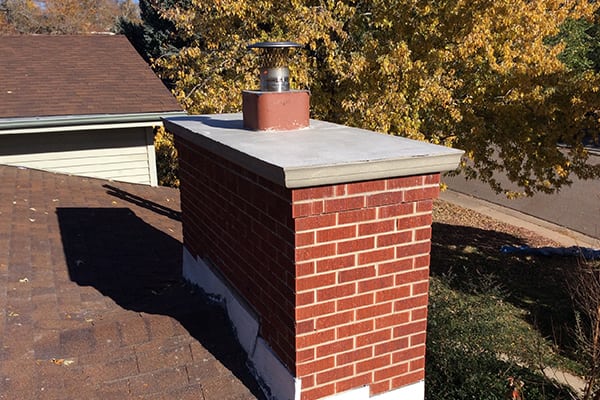
The chimney crown is the slab of concrete (or sometimes mortar) that covers the entire top of your chimney structure. It surrounds the flue tile and extends to the outer edges of the chimney, with a slope designed to shed water away from the flue and off the sides.
People confuse the crown with the chimney cap. They’re different things. The cap is the metal cover that sits over the flue opening, keeping rain and animals out of the flue itself. The crown is the concrete platform the cap sits on. It protects the brick and mortar structure of the chimney from water penetration at the top, which is where the most exposure occurs. [Link to /chimney-caps/]
When the crown is intact, water rolls off the slope, drips past the chimney’s edge, and never reaches the masonry below. When it’s cracked, chipped, or missing pieces, water goes straight into the chimney structure. In most climates, that’s a slow problem. In Denver, it’s an accelerated one.
Why Chimney Crowns Fail in Denver
Three things destroy chimney crowns along the Front Range, and they work together.
Freeze-Thaw Cycling
Denver averages over 100 freeze-thaw cycles per year. Water enters a hairline crack in the crown, freezes overnight, expands by roughly 9%, and widens the crack. The next afternoon it thaws, runs deeper into the newly widened gap, and freezes again that night. A crack that was invisible in September can be a quarter-inch wide by March. By the following year, pieces of the crown start breaking off entirely.
This is the single biggest cause of crown failure we see. The crown sits fully exposed on top of the chimney with zero shelter from precipitation. Every rainstorm, every snowfall, every hailstorm delivers water directly onto its surface. No other component on your house takes this kind of repetitive freeze-thaw abuse.
UV Exposure
Denver gets over 300 days of sunshine per year, and at 5,280 feet the UV intensity is meaningfully higher than at sea level. UV breaks down the binding agents in concrete over time, making the surface more porous and more susceptible to water absorption. A crown that’s been baking in Colorado sun for 15 years absorbs water faster than one in Portland or Minneapolis, even if it has no visible cracks.
Hail
Colorado’s spring and summer hailstorms can chip, crack, or outright break a crown in a single event. Most homeowners check their roof and siding after a hailstorm. Very few climb up and look at the chimney crown. The damage sits there unnoticed, collecting water, until the next winter’s freeze-thaw cycle turns a hail chip into a structural crack.
Poor Original Construction
This one isn’t weather-related, but we see it constantly. A crown built with standard mortar instead of concrete will fail faster because mortar isn’t designed for horizontal exposure to standing water. A crown poured flat without any slope won’t shed water. A crown poured flush against the flue tile without a bond break will crack when the tile expands with heat, because the two materials expand at different rates. A lot of the crown failures we repair in Denver homes built in the 1970s through 1990s trace back to construction shortcuts that finally caught up.
Signs You Need Chimney Crown Repairs
While this list doesn’t include everything that may go wrong, it will give you an idea of what to look for:
- Any Visible Cracks – You don’t need a giant gash in the masonry to begin seeing problems. Even small cracks in the crown can let in water, ants, termites and more.
- Rust – If the crown is damaged and not doing its job correctly, moisture can enter your chimney and rust components like the damper. Give us a call if you notice rust or stains.
- Moisture Damage – Inspect interior walls that are adjacent to your chimney for signs of water damage, included frayed or bubbled wallpaper, paint stains or blotches.
- Brick Breakdown – When bricks and mortar crumble or fall out, severe water damage is often the culprit. An inspection will pinpoint the cause, whether your crown or another component.
To ensure the crown can do its job correctly, it’s important to catch any of these problems early and bring in the professionals for chimney crown repairs.

Crown Repair Options
Crown Coating and Sealing
For crowns with hairline to moderate cracking but no structural loss, a flexible crown coating is the right fix. We apply an elastomeric sealant designed specifically for chimney crowns. It bonds to the existing concrete, fills cracks, and creates a waterproof membrane that flexes with temperature changes instead of cracking like rigid sealants do. A good crown coat can extend the life of a sound-but-aging crown by 10 to 15 years.
Crown coating only works when the underlying concrete is still structurally intact. If chunks are missing or the crown is crumbling, coating over it is a waste of money. We’ll tell you which situation applies.
Partial Crown Repair
When damage is limited to one section, we can remove the failed area and rebuild it without replacing the entire crown. This is common with hail damage to one edge or frost damage that’s concentrated on the north-facing side (which gets less sun and stays wet longer). We rebuild with proper concrete, match the slope to the existing crown, and coat the repaired area.
Full Crown Replacement
When the crown is crumbling throughout, was poorly constructed in the first place, or has failed to the point where repairs would cost nearly as much as replacement, the old crown comes off and a new one goes on.
We build replacement crowns with portland cement concrete (not mortar), a minimum 2-inch thickness at the thinnest point, a proper slope from the flue tile outward, a drip edge overhang that extends past the chimney edge by at least 2 inches so water drips free of the brick below, and a bond break between the crown and the flue tile using a flexible sealant that allows the tile to expand without cracking the new crown.
Every detail matters. The drip edge prevents water from running down the face of the chimney, which is how most upper-course brick deterioration starts. The bond break prevents the number one cause of new crown cracking. The slope ensures water moves outward instead of pooling. Skip any of these and you’re building a crown that will fail the same way the old one did.
Crown Waterproofing
After any crown repair or replacement, we apply a waterproofing treatment to the new surface. This adds an extra layer of protection against water absorption and extends the life of the repair. Combined with a chimney cap that keeps direct precipitation off the crown surface, waterproofing can double the interval between crown maintenance. [Link to /chimney-caps/]
Chimney Crown vs. Chimney Cap
We get this question almost every day, so it’s worth laying out clearly.
The crown is the concrete slab covering the top of the chimney structure. It seals the gap between the flue tile and the outer edge of the chimney bricks. It’s structural and it’s permanent (until it needs repair or replacement).
The cap is a metal cover (stainless steel or copper, usually) that sits on top of the flue tile or on the crown itself. It has a solid top and mesh sides. Its job is to keep rain, animals, and debris out of the flue opening while still letting combustion gases vent.
You need both. A crown without a cap lets rain fall directly into your flue. A cap without a sound crown lets water into the chimney structure around the flue. They work as a system. We inspect and service both.

Why Chimney Sweeps of America for Crown Work
We know what fails in Denver. Forty-plus years of repairing crowns along the Front Range means we’ve seen every failure pattern this climate produces. We build crowns that account for freeze-thaw, UV, hail, and thermal expansion because we’ve watched crowns that don’t account for those things fall apart in three to five years.
Proper construction, not shortcuts. We use concrete, not mortar. We build drip edges. We install bond breaks. We slope correctly. These details are the difference between a crown that lasts 20 years and one that starts cracking next winter.
Honest evaluation. If your crown needs coating, we’ll coat it. If it needs replacement, we’ll say so and explain why. We don’t replace crowns that can be repaired, and we don’t coat crowns that need replacing.
CSIA certified. Every technician on the job holds certification from the Chimney Safety Institute of America.
Frequently Asked Questions About Chimney Crowns
A crown coating on an otherwise sound crown is on the lower end. Partial repairs run more, and a full crown replacement is a larger project. The cost depends on chimney size, accessibility, and the extent of damage. We quote after on-site evaluation.
From the ground, look for visible cracks, missing pieces along the edges, or white staining (efflorescence) on the upper bricks. Water in your firebox after rain is another indicator. The most reliable way to know is a professional inspection from roof level.
Hairline cracks and moderate surface cracking can be repaired with a flexible crown coating. If the crown is crumbling, has chunks missing, or was improperly built, replacement is the better investment. We’ll tell you which path makes sense for your situation.
The crown is the concrete slab covering the top of the chimney structure. The cap is the metal cover over the flue opening. The crown protects the masonry; the cap protects the flue interior. You need both working to keep water out of the system.
A properly built concrete crown with waterproofing can last 20 to 30 years in Denver’s climate. A mortar crown or one built without a drip edge and bond break may fail in 5 to 10 years. Most crown failures we see are construction-quality issues compounded by freeze-thaw exposure over time.
Storm damage from hail, wind, or lightning is typically covered. Normal wear from aging and freeze-thaw is generally not. We provide documentation of damage for insurance claims when the damage qualifies.
At least once a year, ideally in late summer or early fall before the heavy freeze-thaw season starts. After any significant hailstorm is also a good time to have it checked. We evaluate the crown during every standard chimney inspection.
Chimney Crowns Related Services
-
Chimney Caps — Metal cap installation and replacement over the flue opening
-
Masonry Repairs— Tuckpointing, brick replacement, and chimney waterproofing
-
Chimney Inspections — Condition reports including crown, cap, and flashing evaluation
-
Chimney Repairs— Full-system chimney repair including liner, flashing, and structural work
Proudly serving Denver, Wheat Ridge, Lakewood, Arvada, Golden, Boulder, Littleton, Englewood, Aurora, Westminster, Centennial, Parker, and all of metro Denver.