
Chimney Sweeps of America’s 3-Level Chimney Inspection Process
Level I Inspection
This inspection is recommended when your chimney, venting system and fireplace are easily accessible and when you are planning on maintaining its current use. This level of chimney inspection is typically performed in homes here in Denver. Our CSIA certified chimney sweep will verify that your chimney structure is sound, as well as free of blockages and combustible deposits like creosote.
Level II Inspection
Modifications to your system, from relining the flue to changing the type of fuel you’re burning, require a Level II inspection. This inspection level is also required upon the sale or transfer of a property, as well as after an operating malfunction or external event that may have damaged your fireplace and chimney.
The scope of Level II chimney inspection services includes that of the Level I plus:
- Inspection of accessible areas of your attic, basement, and crawl spaces
- Performance testing such as a smoke or pressure test
- Interior video inspection if recommended by your chimney sweep
Level III Inspection
When a Level I or Level II inspection suggests a hidden hazard and the evaluation cannot be performed without access to concealed areas, Level III chimney inspection services are recommended. Here we’ll confirm the construction and condition of concealed portions of your fireplace and chimney structure, including the flue. This type of inspection is generally necessary when investigating an incident that has caused damage to the fireplace, chimney, building, or where a risk has been detected or suspected.
Why Annual Chimney Inspections Matter in Denver
A chimney that looks fine from your living room can be falling apart where you can’t see it. Cracked flue liners, eroded mortar joints, rusted dampers, animal nests blocking airflow — none of these are visible without a trained inspector examining the system component by component.
Denver’s climate accelerates every one of these problems. The Front Range averages over 100 freeze-thaw cycles per year. Each one drives moisture deeper into masonry, widening cracks that were hairline fractures a season ago. At 5,280 feet, reduced oxygen affects combustion efficiency and increases creosote production in wood-burning systems. And Colorado’s intense UV exposure degrades crowns, caps, and flashing faster than lower-elevation climates.
The National Fire Protection Association standard (NFPA 211) is clear: every chimney, fireplace, and vent should be inspected at least once a year. That’s not a marketing pitch, it’s the safety standard that every certified inspector in the country follows. An annual inspection catches $200 problems before they become $5,000 emergencies.
By the numbers: Chimney fires cause an average of $137 million in property damage annually in the United States. Carbon monoxide from blocked or damaged chimneys kills approximately 430 Americans per year. Both are preventable with annual inspection and maintenance.
What We Inspect
Every chimney inspection at Chimney Sweeps of America is performed by a technician certified by the Chimney Safety Institute of America. We don’t send helpers or apprentices but instead send a certified inspector is on-site for the full evaluation. Here’s exactly what gets examined:
Flue Liner
The liner is your chimney’s first line of defense. It contains combustion gases and protects your home’s framing from heat transfer. We check for cracks, gaps, deterioration, and missing sections. Clay tile liners are especially vulnerable to freeze-thaw damage along the Front Range. If the liner is compromised, heat and gases can reach combustible materials in your walls and attic and that’s how chimney fires start.
Smoke Chamber and Damper
The smoke chamber funnels combustion gases from the firebox into the flue. We inspect it for cracks, missing parging, and gaps that allow heat to contact wood framing. The damper gets checked for proper operation, rust, warping, and seal integrity. A damper that doesn’t close fully costs you money in heating loss all winter. A damper that doesn’t open fully causes smoke to back-draft into your home.
Firebox
The firebox takes the most direct heat punishment of any component. We examine the firebrick for cracks, spalling, and deterioration. Damaged firebrick can expose the chimney structure behind it to temperatures it was never designed to handle. We also check clearances to combustible materials — a critical safety measurement that gets overlooked by uncertified inspectors.
Crown, Cap, and Flashing
These are your chimney’s weather defenses. The crown (the concrete slab on top) cracks under Denver’s UV and freeze-thaw stress. The cap keeps rain, snow, and animals out of the flue. The flashing — the metal seal where the chimney meets the roof — is the most common source of chimney leaks. We check all three for damage, deterioration, and proper installation. A failed crown or missing cap can let gallons of water into your chimney system every storm, accelerating interior damage you won’t see until it’s expensive.
Exterior Masonry
We examine all visible mortar joints for erosion, cracking, and separation. Spalling brick — where the face of the brick flakes off — is a telltale sign of moisture intrusion and freeze-thaw damage. Caught early, this is a tuckpointing repair. Left alone, it becomes a partial or full chimney rebuild.
Obstructions
Animal nests, leaves, debris, and collapsed liner sections can block your flue. A blocked chimney can’t ventilate combustion gases, which means carbon monoxide backs up into your living space instead of going up and out. We verify the flue is clear from top to bottom.
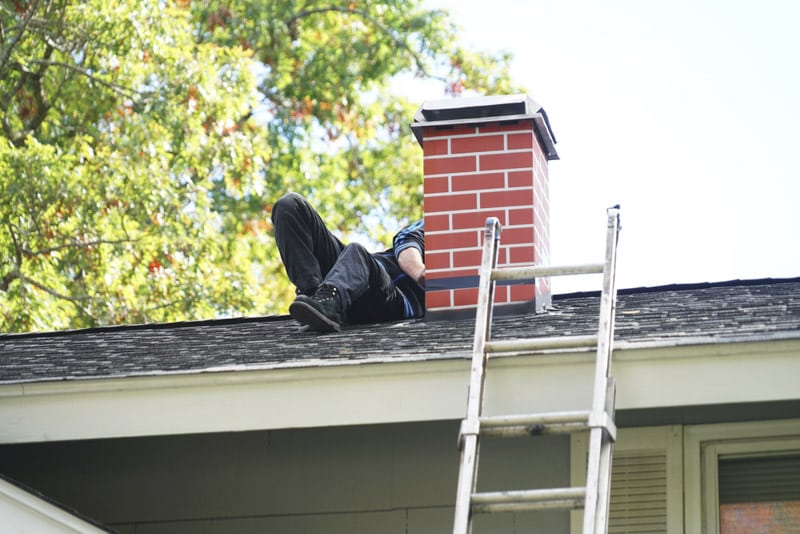
Three Levels of Chimney Inspection
The NFPA defines three inspection levels, each with a specific scope and purpose. We perform all three.
Level 1 Inspection — Annual Maintenance
This is the standard annual inspection for chimneys that are continuing their current use with no changes to the system. Your CSIA-certified inspector visually examines all accessible components — the flue liner (from the firebox opening), the smoke chamber, the damper, the firebox, the exterior chimney, the crown, the cap, and the flashing. No specialized tools or cameras are required. This is the inspection included with every chimney sweep at no additional charge, and it’s the right choice for routine maintenance. — See current pricing]
Level 2 Inspection — Sales, Incidents, and System Changes
A Level 2 inspection includes everything in Level 1 plus interior video scanning of the flue and examination of accessible areas of your attic, basement, and crawl spaces. This level is required by NFPA 211 in three situations: when a home is being sold or transferred, after a chimney fire or other incident, or when any change is being made to the system (such as a new liner, different fuel type, or modified flue size). The video scan reveals interior damage that a visual-only inspection can’t detect — hairline cracks in the liner, internal erosion, and hidden obstructions. If you’re buying or selling a home in the Denver metro area, this is the inspection your transaction needs.
Level 3 Inspection — Suspected Hidden Damage
A Level 3 inspection is only recommended when a Level 1 or Level 2 reveals evidence of a concealed hazard that can’t be evaluated without removing building components — drywall, chimney chase panels, or portions of the chimney structure itself. This is investigative work, not routine maintenance. We’ll discuss the scope, cost, and timeline with you before any removal begins. Level 3 inspections are rare, but when they’re needed, they’re critical.

Chimney Inspections for Gas Fireplaces
One of the most common misconceptions we hear: “My fireplace is gas, so I don’t need an inspection.” Wrong. Gas fireplaces don’t produce creosote, but they have their own failure points that require annual evaluation.
A gas fireplace inspection covers the thermocouple and thermopile (the sensors that detect flame and control gas flow), the gas valve and supply line connections, the pilot assembly and ignition system, the ceramic logs or glass media for proper positioning, the venting system for blockages or disconnections, and carbon monoxide ventilation to ensure combustion gases are leaving your home and not accumulating inside it.
A malfunctioning gas fireplace can leak carbon monoxide just as effectively as a neglected wood-burning one. Our NFI-certified technicians are trained on gas, wood, and pellet systems — we inspect all of them.
Denver-Chimney Specific Inspection Concerns
Freeze-Thaw Cycle Damage
Denver averages over 100 freeze-thaw cycles per year — far more than most U.S. cities. Water enters tiny cracks in mortar joints and the chimney crown, freezes, expands by about 9%, and widens those cracks. After a few seasons, what started as cosmetic wear becomes structural compromise. Our inspection specifically evaluates freeze-thaw damage on every exterior surface and joint.
Altitude and Combustion
At mile-high elevation, roughly 17% less oxygen is available for combustion. Wood fires burn less efficiently, producing more smoke and more creosote per burn. Our inspectors know what “normal” creosote accumulation looks like at altitude versus at sea level — and when buildup has crossed the line from routine to hazardous.
Hail and Wind Damage To Your Chimney
Colorado’s spring and summer hailstorms regularly damage chimney caps, crowns, and flashing. High winds can shift chimney caps, loosen flashing seals, and even crack mortar on older chimneys. If you’ve had a significant storm and haven’t had your chimney checked, the damage may already be letting moisture into the system.

Why Chimney Sweeps of America
CSIA and NFI certified. Every inspector on our team holds certification from the Chimney Safety Institute of America. We also have multiple NFI Master Hearth Professionals on staff — a credential that very few companies in Colorado carry.
40+ years of Denver-specific experience. We’ve been inspecting chimneys along the Front Range since 1982. We know what Colorado weather does to masonry, liners, crowns, and caps — because we’ve seen it thousands of times.
Honest condition reports. We’ll tell you what needs repair and what doesn’t. If your chimney is in good shape, we’ll say so. If something needs attention, we’ll explain the issue in plain language, show you what we’re seeing, and give you options — not a high-pressure sales pitch. We provide chimney repair services [Link to /chimney-repairs/] in-house, so if work is needed, there’s no need to call a second company.
689 reviews, 4.9 stars. Our reputation isn’t built on marketing. It’s built on 40 years of showing up, doing the work right, and treating people’s homes with respect.
Frequently Asked Questions About Chimney Inspections
A Level 1 inspection starts at $165 for wood-burning and open gas fireplaces, and $215 for sealed (behind-glass) gas fireplaces. If cleaning is needed during the same visit, a $100 cleaning fee applies. Level 2 and Level 3 inspections are quoted based on scope. See our full pricing page.
Annually, per NFPA 211. This applies whether you burn wood, gas, or pellets — and even if you haven’t used your fireplace in a while. Animal nests, moisture damage, and material deterioration happen whether you’re burning or not.
A chimney sweep is the physical cleaning — removing creosote, soot, and debris from the flue. A chimney inspection is the evaluation of every component’s structural and functional condition. We include a Level 1 inspection with every chimney sweep at no extra cost.
Yes. Gas fireplaces don’t produce creosote, but the venting system, gas valve, thermocouple, and pilot assembly all need annual evaluation. A malfunctioning gas system can leak carbon monoxide into your home.
Colorado doesn’t legally require it, but NFPA 211 calls for a Level 2 inspection on any property sale or transfer. Most home inspectors flag the chimney as needing specialist evaluation, and buyers frequently request it during due diligence. A clean report removes a negotiation obstacle.
We explain the issue in plain language, show you what we’re seeing if possible, and give you an honest assessment of urgency. If it’s a safety issue, we’ll tell you. If it can wait, we’ll tell you that too. We handle chimney repairs, masonry work , liner replacement, and cap and crown repair in-house.
Late summer or early fall before you start burning for the season. This gives us time to address any repairs before the cold hits. That said, we inspect year-round. If it’s been more than a year, don’t wait for the “right” time, call us today.
Related Chimney Services
-
Chimney Sweep Services — Professional creosote removal with a Level 1 inspection included
-
Chimney Repairs — Mortar joint repair, crown repair, liner replacement, and structural restoration
-
Masonry Repairs — Tuckpointing, brick replacement, and waterproofing
-
Chimney Caps — Installation and replacement to protect against weather and wildlife
-
Fireplace Inspections — Focused evaluation of firebox, hearth, and fireplace-specific components
Proudly serving Denver, Wheat Ridge, Lakewood, Arvada, Golden, Boulder, Littleton, Englewood, Aurora, Westminster, Centennial, Parker, and all of metro Denver.